Your How does a diesel locomotive work images are available in this site. How does a diesel locomotive work are a topic that is being searched for and liked by netizens today. You can Get the How does a diesel locomotive work files here. Get all free images.
If you’re looking for how does a diesel locomotive work images information connected with to the how does a diesel locomotive work interest, you have pay a visit to the right site. Our site always gives you hints for seeing the highest quality video and image content, please kindly search and find more informative video content and graphics that fit your interests.
How Does A Diesel Locomotive Work. When Englishman Richard Trevithick launched the first practical steam locomotive in 1804 it averaged less than 10 mph. The diesel engine A is the main component of the diesel-electric locomotive. In warmer months the engines time out and shut themselves down. A Diesel Locomotive is a self-powered railway vehicle that moves along the rails and pulls or pushes a train attached to it using a huge internal combustion engine running on Diesel fuel as the prime mover or the primary supplier of power.
 How An Electric Locomotive Works Youtube Electric Locomotive Locomotive Traction Motor From pinterest.com
How Many Miles Per Gallon Does A Diesel Locomotive Get. The 567 series the 645 series and the 710 series. Physical limitations are provided in the form of butterfly valves mounted in-line to the exhaust system operated by servomotors pneumatics or any other means required to. Since a gallon of fuel oil contains approximately 130000 Btu of energy only 2025 of this would be available to produce work that is pull the train. Are Electric Trains Faster Than Diesel. In warmer months the engines time out and shut themselves down.
During shutdown a warning bell sounds in the cab.
Diesel exhaust brakes operate by physically limiting the flow of exhaust to generate additional back pressure thereby slowing down the engine speed. These values are in contrast to the 58 efficiency of a steam locomotive. About Press Copyright Contact us Creators Advertise Developers Terms Privacy Policy. Physical limitations are provided in the form of butterfly valves mounted in-line to the exhaust system operated by servomotors pneumatics or any other means required to. Explains the basics ofhow a diesel electric locomotive works using an ALCO RS-11. That electrical energy is sent to the traction motors.
 Source: pinterest.com
This electrical energy powers large electric motors at the wheels called traction motors. The diesel engine A is the main component of the diesel-electric locomotive. Answer 1 of 6. Because they do not carry. A diesel engine operates by cycling between four different strokesThe first step isIntake Stroke The piston starts at the top of the cylinder as it moves.
 Source: pinterest.com
This 270000-pound 122470-kg locomotive is designed to tow passenger-train cars at speeds of up to 110 miles per hour 177 kph. A Diesel Locomotive is a self-powered railway vehicle that moves along the rails and pulls or pushes a train attached to it using a huge internal combustion engine running on Diesel fuel as the prime mover or the primary supplier of power. A diesel engine operates by cycling between four different strokesThe first step isIntake Stroke The piston starts at the top of the cylinder as it moves. That electrical energy is sent to the traction motors. It is an internal combustion engine.
 Source: pinterest.com
They are used in DEMU trains and diesel loco hauled trains. The electricity gathered from overhead wires or generated by the diesel engine is then sent to the traction motors on each car. DC and AC Power. During shutdown a warning bell sounds in the cab. Diesel exhaust brakes operate by physically limiting the flow of exhaust to generate additional back pressure thereby slowing down the engine speed.
 Source: br.pinterest.com
Diesel exhaust brakes operate by physically limiting the flow of exhaust to generate additional back pressure thereby slowing down the engine speed. This 270000-pound 122470-kg locomotive is designed to tow passenger-train cars at speeds of up to 110 miles per hour 177 kph. Answer 1 of 6. Basically the dynamic braking system is a reverse of the power system. How Diesel Locomotives Work.
 Source: pinterest.com
How Diesel Locomotives Work. This 270000-pound 122470-kg locomotive is designed to tow passenger-train cars at speeds of up to 110 miles per hour 177 kph. In warmer months the engines time out and shut themselves down. These trains operate either by electric traction or are powered by a diesel prime mover. Physical limitations are provided in the form of butterfly valves mounted in-line to the exhaust system operated by servomotors pneumatics or any other means required to.
 Source: pinterest.com
About Press Copyright Contact us Creators Advertise Developers Terms Privacy Policy. If the reverser is not moved in a certain amount of seconds the diesel stops. A Diesel Locomotive is a self-powered railway vehicle that moves along the rails and pulls or pushes a train attached to it using a huge internal combustion engine running on Diesel fuel as the prime mover or the primary supplier of power. A large diesel engine turns a shaft that drives a generator which makes electricity. Under normal powering mode the generator is turned via mechanical energy to create electrical energy.
 Source: pinterest.com
A large diesel engine turns a shaft that drives a generator which makes electricity. Diesel fuel is stored in a fuel tank and delivered to the engine by an electric fuel pump. If the reverser is not moved in a certain amount of seconds the diesel stops. The diesel-electric locomotive has a thermal efficiency percent of useful work derived from a unit of fuel of 2025. This 270000-pound 122470-kg locomotive is designed to tow passenger-train cars at speeds of up to 110 miles per hour 177 kph.
 Source: pinterest.com
How Diesel Locomotives Work. How Much Diesel Does It Take To Start A Train. How Many Miles Per Gallon Does A Diesel Locomotive Get. The diesel engine A is the main component of the diesel-electric locomotive. If the reverser is not moved in a certain amount of seconds the diesel stops.
 Source: pinterest.com
Diesel fuel is stored in a fuel tank and delivered to the engine by an electric fuel pump. The diesel-electric locomotive has a thermal efficiency percent of useful work derived from a unit of fuel of 2025. This electrical energy powers large electric motors at the wheels called traction motors. Are Electric Trains Faster Than Diesel. These engines were introduced in the 1930s and power a large number of the diesel locomotives found in the United States.
 Source: pinterest.com
Since a gallon of fuel oil contains approximately 130000 Btu of energy only 2025 of this would be available to produce work that is pull the train. 38 Steam Engine- How does it Work Steam Engine Working Function Explain How Locomotive Engine Work. How Does A Diesel Electric Locomotive Work. Because they do not carry. Under normal powering mode the generator is turned via mechanical energy to create electrical energy.
 Source: pinterest.com
The diesel-electric locomotive has a thermal efficiency percent of useful work derived from a unit of fuel of 2025. These values are in contrast to the 58 efficiency of a steam locomotive. Diesel exhaust brakes operate by physically limiting the flow of exhaust to generate additional back pressure thereby slowing down the engine speed. The diesel engine makes 3200 horsepower and the generator can turn this into almost 4700 amps of electrical current. 38 Steam Engine- How does it Work Steam Engine Working Function Explain How Locomotive Engine Work.
 Source: in.pinterest.com
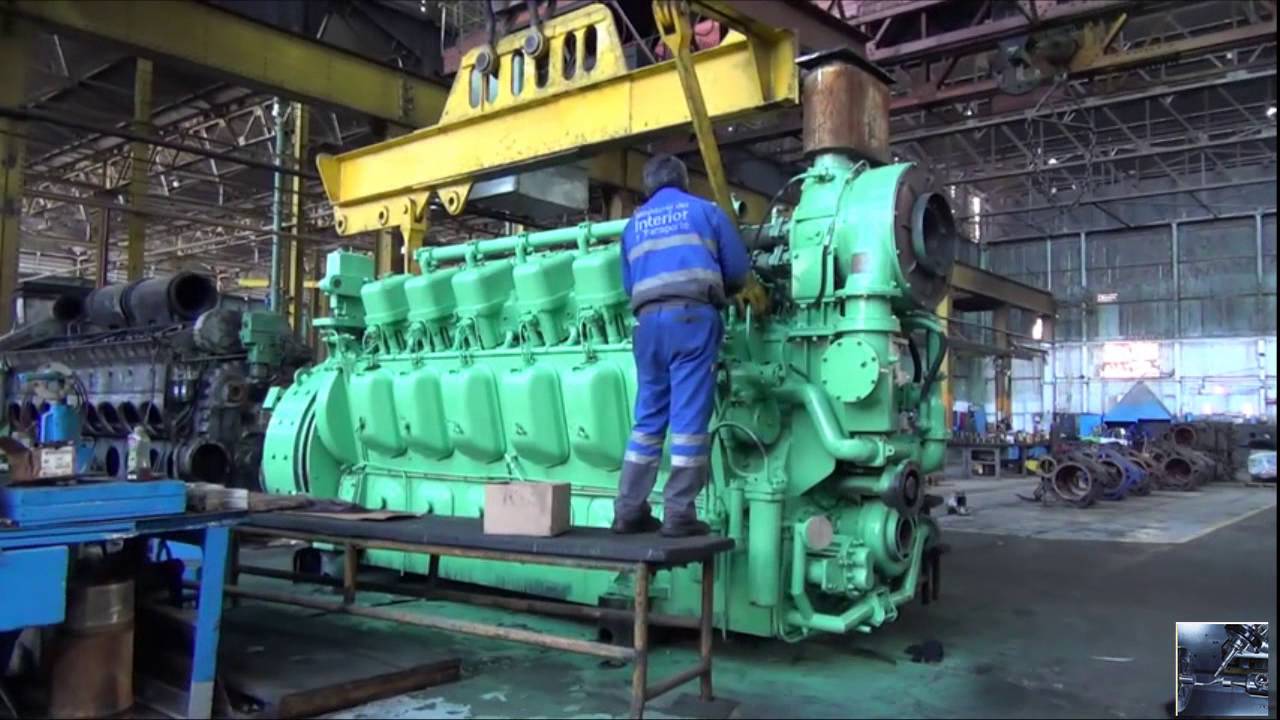
A diesel engine operates by cycling between four different strokesThe first step isIntake Stroke The piston starts at the top of the cylinder as it moves. A Diesel Locomotive is a self-powered railway vehicle that moves along the rails and pulls or pushes a train attached to it using a huge internal combustion engine running on Diesel fuel as the prime mover or the primary supplier of power. Diesel fuel is stored in a fuel tank and delivered to the engine by an electric fuel pump. During shutdown a warning bell sounds in the cab. Diesel engine working function Diesel locomotive.
 Source: pinterest.com
When Englishman Richard Trevithick launched the first practical steam locomotive in 1804 it averaged less than 10 mph. Why Is One Locomotive Always Backwards. You will learn the working of diesel trains or diesel locomotives in this article. It is an internal combustion engine. Diesel fuel is stored in a fuel tank and delivered to the engine by an electric fuel pump.
 Source: pinterest.com
The engines start automatically when the water temp gets below a certain level to prevent freezing. These engines were introduced in the 1930s and power a large number of the diesel locomotives found in the United States. They are used in DEMU trains and diesel loco hauled trains. A diesel engine operates by cycling between four different strokesThe first step isIntake Stroke The piston starts at the top of the cylinder as it moves. Why Are Diesel Locomotives Left Running.
 Source: pinterest.com
The 567 series the 645 series and the 710 series. Physical limitations are provided in the form of butterfly valves mounted in-line to the exhaust system operated by servomotors pneumatics or any other means required to. Because they do not carry. What Are The Disadvantages Of Diesel-Electric Traction. These trains operate either by electric traction or are powered by a diesel prime mover.
 Source: pinterest.com
The main parts are the power pack the drive unit the traction motor the diesel tank the air intake and the governor. There have been three successive series in the EMD line. The main parts are the power pack the drive unit the traction motor the diesel tank the air intake and the governor. Since a gallon of fuel oil contains approximately 130000 Btu of energy only 2025 of this would be available to produce work that is pull the train. In many parts of the world diesel-electric locomotives are the primary hauling power for trains.
 Source: pinterest.com
What Makes A Diesel Locomotive Work. Physical limitations are provided in the form of butterfly valves mounted in-line to the exhaust system operated by servomotors pneumatics or any other means required to. A diesel-electric locomotive is similar to a road vehicle i. MUd units operated the same way. Diesel fuel is stored in a fuel tank and delivered to the engine by an electric fuel pump.
 Source: pinterest.com
Let us now see how they work together. These engines were introduced in the 1930s and power a large number of the diesel locomotives found in the United States. Let us now see how they work together. The engines start automatically when the water temp gets below a certain level to prevent freezing. In warmer months the engines time out and shut themselves down.
This site is an open community for users to submit their favorite wallpapers on the internet, all images or pictures in this website are for personal wallpaper use only, it is stricly prohibited to use this wallpaper for commercial purposes, if you are the author and find this image is shared without your permission, please kindly raise a DMCA report to Us.
If you find this site good, please support us by sharing this posts to your favorite social media accounts like Facebook, Instagram and so on or you can also bookmark this blog page with the title how does a diesel locomotive work by using Ctrl + D for devices a laptop with a Windows operating system or Command + D for laptops with an Apple operating system. If you use a smartphone, you can also use the drawer menu of the browser you are using. Whether it’s a Windows, Mac, iOS or Android operating system, you will still be able to bookmark this website.


