Your How do antagonistic muscles work images are ready in this website. How do antagonistic muscles work are a topic that is being searched for and liked by netizens now. You can Get the How do antagonistic muscles work files here. Get all free photos and vectors.
If you’re searching for how do antagonistic muscles work pictures information connected with to the how do antagonistic muscles work interest, you have come to the right site. Our site always gives you hints for viewing the highest quality video and picture content, please kindly surf and find more enlightening video content and graphics that fit your interests.
How Do Antagonistic Muscles Work. For example a person uses certain sets of muscles to open his hand and splay his fingers wide. For example when you perform a bicep curl the biceps will be the agonist as it contracts to produce the. Muscles that work like this are called antagonistic pairs. Needs to be another muscle that shortens in order to cause movement in the opposite direction.
 What Are Antagonistic Muscles Give One Example Biology Shaalaa Com From shaalaa.com
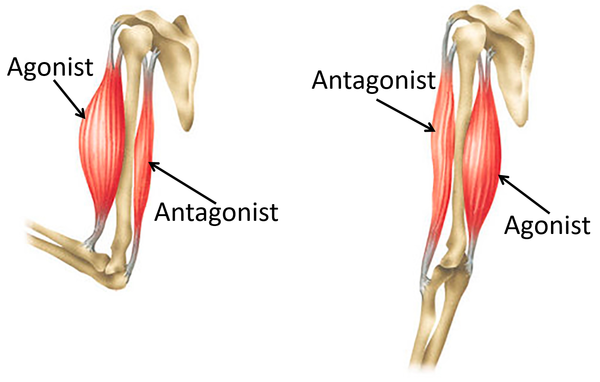
They move our bones and associated body parts by pulling on them this process is called muscle contraction. As one muscle contracts the other relaxes. Figure 2 shows known projections of reciprocal inter- neurons that could subserve such con- trol Baldissera et al. The muscle that is contracting is called the agonist and the muscle that is relaxing or lengthening is called the antagonist. In an antagonistic muscle pair as one muscle contracts the other muscle relaxes or lengthens. For example a person uses certain sets of muscles to open his hand and splay his fingers wide.
Antagonistic pairs are needed in the body because muscles can only exert a pulling force and cant push themselves back into their original positions.
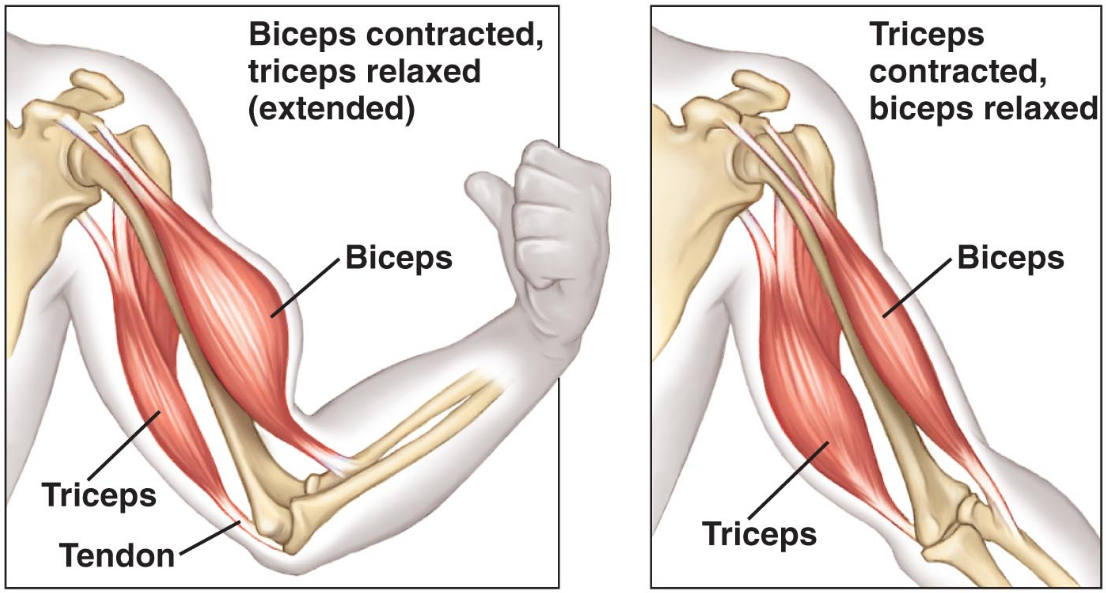
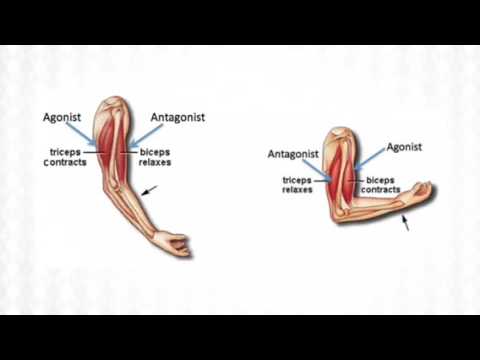
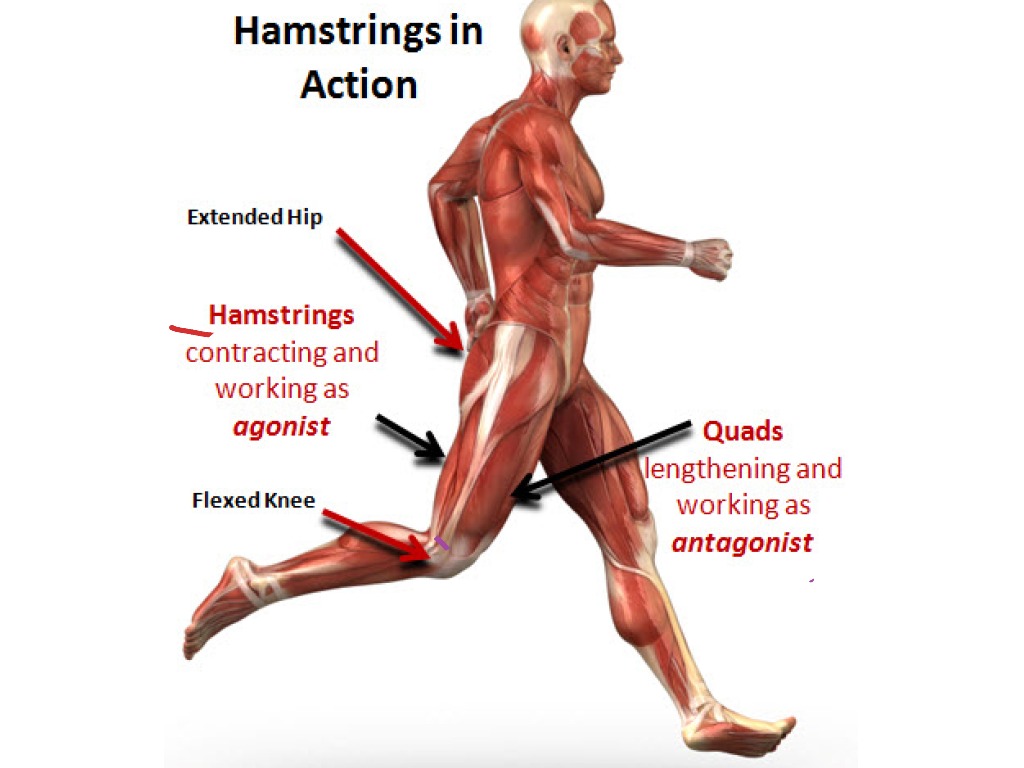
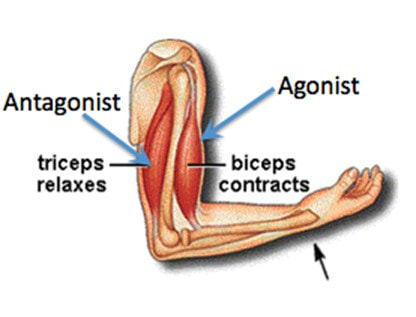
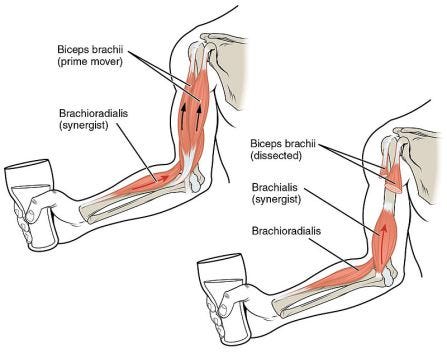
In an antagonistic muscle pair as one muscle contracts the other muscle relaxes or lengthens. For example when you perform a bicep curl the biceps will be the agonist as it contracts to produce the. The muscle that is contracting is called the agonist and the muscle that is relaxing or lengthening is called the antagonist. When extending the elbow the opposite happens. These muscles move in the opposite direction to the agonist muscles and offset the force these muscles exert so that we dont damage our fragile joints. Most muscles work in pairs and are called antagonistic muscles.
 Source: homegymr.com
The biceps and triceps are antagonistic muscles muscle musculus - one of the. What are antagonistic muscles and how do they work. For this reason they always come in pairs. For example a person uses certain sets of muscles to open his hand and splay his fingers wide. An example of this kind of muscle pairing is.
 Source: quora.com
Why do antagonistic muscles work in pairs. Skeletal muscle movement takes place with contraction. Figure 2 shows known projections of reciprocal inter-neurons that could subserve such con-trol Baldissera et al. Antagonistic pairs are when two muscles work against each other to complete two opposite movements. How many antagonistic muscle pairs are there.
 Source: 3dmusclelab.com
In an antagonistic muscle pair as one muscle contracts the. Muscles that work like this are called antagonistic pairs. 1a 1 mark KS309ScTier 5-7P2 2 Both muscles contract at the same time. For example when you perform a bicep curl the biceps will be the agonist as it contracts to produce the. Needs to be another muscle that shortens in order to cause movement in the opposite direction.
 Source: brainkart.com
The muscle that is contracting is called the agonist and the muscle that is relaxing or lengthening is called the antagonist. For example when you perform a bicep curl the biceps will be the agonist as it contracts to produce the. Antagonistic muscle - a muscle that opposes the action of another. Muscles that work like this are called antagonistic pairs. Muscles work in antagonistic pairs when one muscle pulls the other muscle relaxes.
 Source: study.com
What are antagonistic muscles and how do they work. They move our bones and associated body parts by pulling on them. Alongside agonist muscles antagonist muscles function as part of a pair that work in tandem to allow the joints and limbs to perform more complex movements. Antagonistic pairs are needed in the body because muscles can only exert a pulling force and cant push themselves back into their original positions. Each muscle in the pair works against the other to move bones at the joints of the body.
 Source: youtube.com
For example when you perform a bicep curl the biceps will be the agonist as it contracts to produce the. As one muscle contracts the other relaxes. Why do antagonistic muscles work in pairs. Antagonistic muscle - a muscle that opposes the action of another. Antagonistic muscle - definition of.
 Source: youtube.com
An example of this kind of muscle pairing is. In principle continuous movements such as locomotion could be repre-sented by a dynamic trajectory of equilibrium positions. They move our bones and associated body parts by pulling on them. In an antagonistic muscle pair as one muscle contracts the. One muscle is big and the other is small.
 Source: showme.com
For example when you perform a bicep curl the biceps will be the agonist as it contracts to produce the. What are antagonistic muscles and how do they work. In an antagonistic muscle pair as one muscle contracts the other muscle relaxes or lengthens. These two muscles work together in an antagonistic pair in order to complete the movement. Why do antagonistic muscles work in pairs.
 Source: youtube.com
In an antagonistic muscle pair as one muscle contracts the other muscle relaxes or lengthens. In an antagonistic muscle pair as one muscle contracts the. In an antagonistic muscle pair as one muscle contracts the other muscle relaxes or lengthens. How many antagonistic muscle pairs are there. In an antagonistic muscle pair as one muscle contracts the other muscle relaxes or lengthens.
 Source: youtube.com
Muscles that work like this are called antagonistic pairs. Muscles that work like this are called antagonistic pairs. How do the antagonistic muscles work. An example of this kind of muscle pairing is. In principle continuous movements such as locomotion could be repre- sented by a dynamic trajectory of equilibrium positions.
 Source: mrgscience.com
Antagonistic muscle - a muscle that opposes the action of another. The muscle set that creates the movement is referred to was the agonist. When extending the elbow the opposite happens. Each muscle in the pair works against the other to move bones at the joints of the body. As one muscle contracts the other relaxes.
 Source: aworldofbiology.weebly.com
When extending the elbow the opposite happens. Antagonistic muscles work together in a few different ways in order to foster movement around your joints. When the elbow is flexed the bicep shortens and pulls up on the ulna to reduce the angle between the ulna and the humerus. An example of this kind of muscle pairing is. When extending the elbow the opposite happens.
Source: shaalaa.com
In an antagonistic muscle pair as one muscle contracts the other muscle relaxes or lengthens. In an antagonistic muscle pair as one muscle contracts the other muscle relaxes or lengthens. 1a 1 mark KS309ScTier 5-7P2 2 Both muscles contract at the same time. Using a skeleton elastic bands and rubber gloves presenter Zoe demonstrates to a group of children how our muscles and bones allow our body to moveWe hear. Skeletal muscle movement takes place with contraction.
 Source: iposture.com
Muscles transfer force to bones through tendons. Both muscles relax at the same time. One muscle is strong and the other is weak. Muscles that work like this are called antagonistic pairs. They move our bones and associated body parts by pulling on them.
 Source: medium.com
Muscles that work like this are called antagonistic pairs. Both muscles relax at the same time. Muscles that work like this are called antagonistic pairs. Figure 2 shows known projections of reciprocal inter- neurons that could subserve such con- trol Baldissera et al. In order to close the hand and make a fist however an antagonistic set of muscles would have to be used.
 Source: study.com
How do antagonistic muscle pairs work. Both muscles relax at the same time. Muscles that work like this are called antagonistic pairs. The muscle that is contracting is called the agonist and the muscle that is relaxing or lengthening is called the antagonist. These muscles move in the opposite direction to the agonist muscles and offset the force these muscles exert so that we dont damage our fragile joints.
 Source: keystagewiki.com
In an antagonistic muscle pair as one muscle contracts the other muscle relaxes or lengthens. An example of this kind of muscle pairing is. For example a person uses certain sets of muscles to open his hand and splay his fingers wide. How many antagonistic muscle pairs are there. The muscle set that creates the movement is referred to was the agonist.
 Source: slideplayer.com
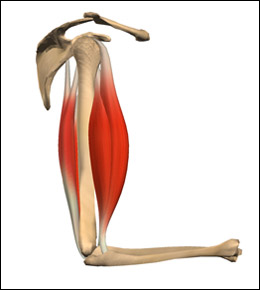
For this reason they always come in pairs. One muscle is strong and the other is weak. As one muscle contracts the other relaxes. 1a 1 mark KS309ScTier 5-7P2 2 Both muscles contract at the same time. In this case when the elbow is flexed the biceps brachii contract shorten and the triceps brachii relax lengthen.
This site is an open community for users to submit their favorite wallpapers on the internet, all images or pictures in this website are for personal wallpaper use only, it is stricly prohibited to use this wallpaper for commercial purposes, if you are the author and find this image is shared without your permission, please kindly raise a DMCA report to Us.
If you find this site beneficial, please support us by sharing this posts to your preference social media accounts like Facebook, Instagram and so on or you can also bookmark this blog page with the title how do antagonistic muscles work by using Ctrl + D for devices a laptop with a Windows operating system or Command + D for laptops with an Apple operating system. If you use a smartphone, you can also use the drawer menu of the browser you are using. Whether it’s a Windows, Mac, iOS or Android operating system, you will still be able to bookmark this website.


