Your 43 directional control valve working principle images are available in this site. 43 directional control valve working principle are a topic that is being searched for and liked by netizens today. You can Download the 43 directional control valve working principle files here. Download all royalty-free vectors.
If you’re searching for 43 directional control valve working principle pictures information connected with to the 43 directional control valve working principle topic, you have pay a visit to the right site. Our website frequently gives you suggestions for viewing the highest quality video and picture content, please kindly search and locate more enlightening video articles and graphics that match your interests.
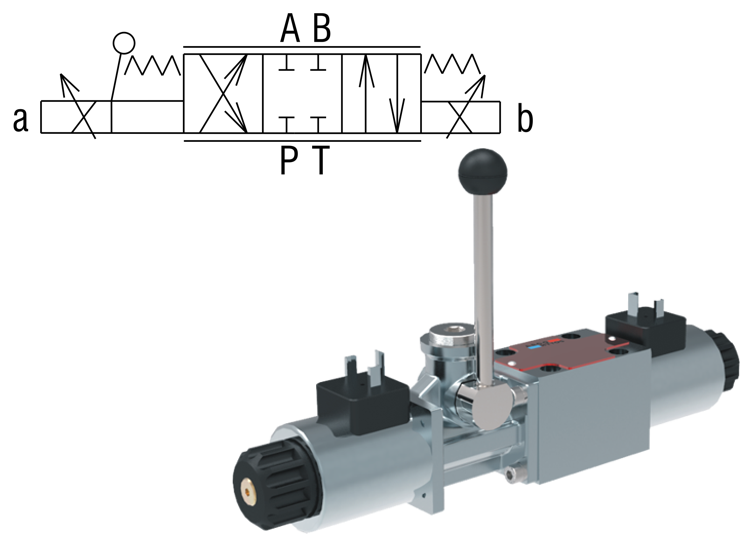
43 Directional Control Valve Working Principle. A 3-position 4-way valve stops an actuator or allows it to float. The additional exhaust port of the 52-way valve offers extra control. This study proposes the design of four waysthree position MR proportional directional control valve 43 MR valve. They are open circuit types.
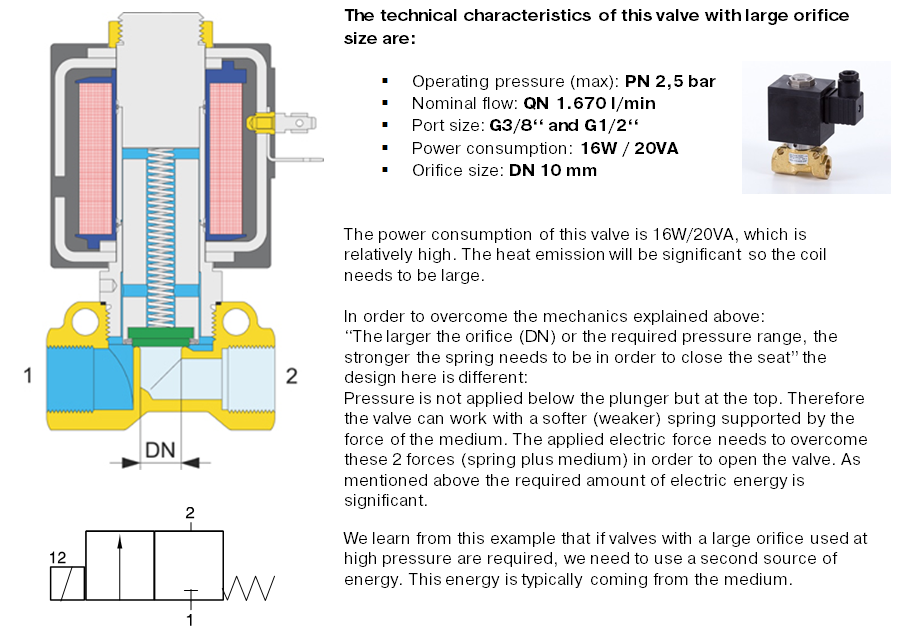 Structure And Function Of Directional Valves From hafner-pneumatik.com
They can control 6 gallery in 3 or 4 spool positions simultaneously. The 4-way function is a common type of directional control valve for both air and hydraulic circuits. The experiment was conducted to show the principle work of the valve functionally. The 53 or 43 series are directional-control valves. A valve with 4. How does a directional control valve work.
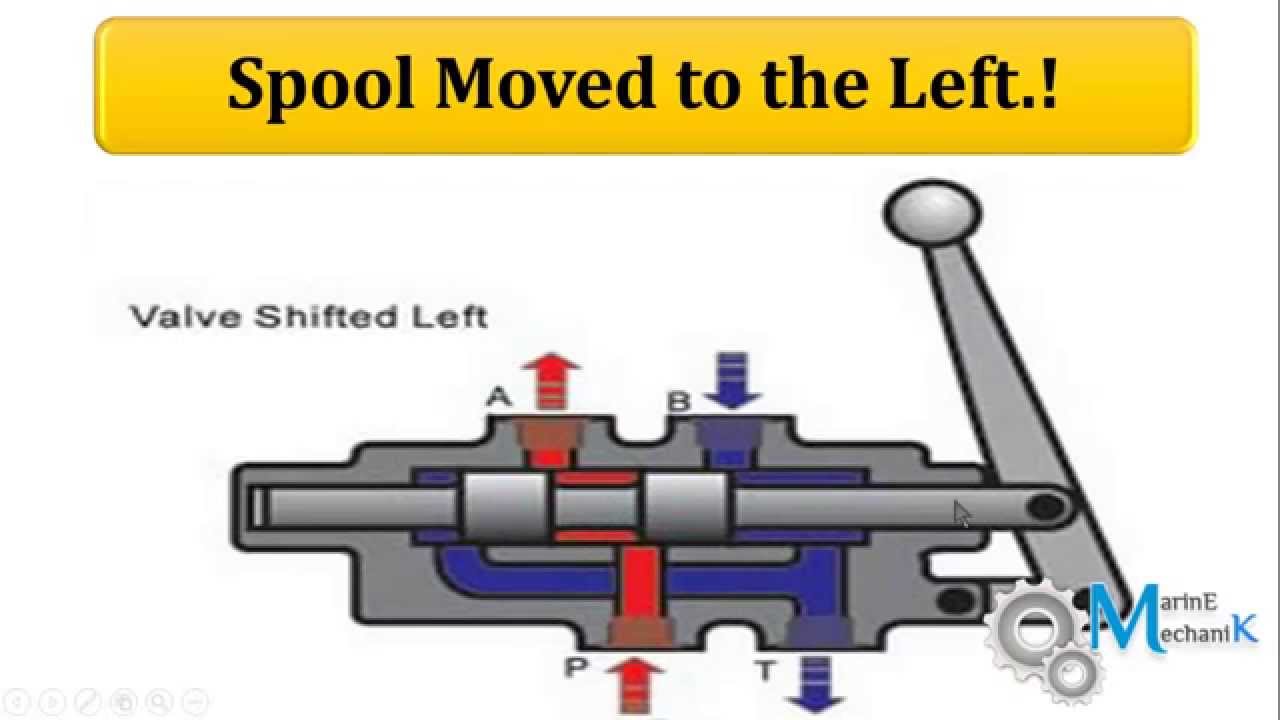
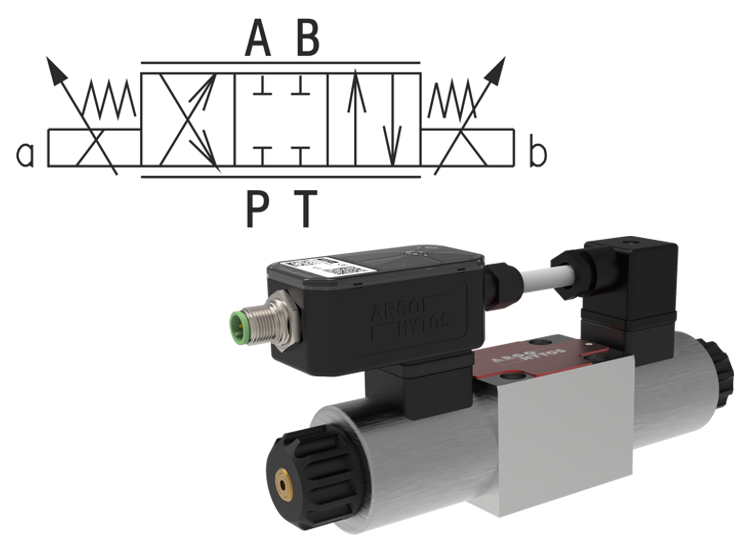
The ports connect to what in a typical model are a hydraulic pump port P a storage tank port T and a double-acting actuator ports A and B.
They can control 6 gallery in 3 or 4 spool positions simultaneously. This means that both port A2 and B4 connect to exhaust port R3. If all of these are selected properly then the proper flow regulation can be achieved. Thus a valve with 2 service ports and 2 switching positions is designated as 2 2 way valve. The experiment was conducted to show the principle work of the valve functionally. The 4-way function is a common type of directional control valve for both air and hydraulic circuits.
 Source: pinterest.com
The ports connect to what in a typical model are a hydraulic pump port P a storage tank port T and a double-acting actuator ports A and B. Exhaust port 3 is closed black. The valve has four ports and three positions. Symbols of the most common valves 22-way valve Normally closed Normally open 32-way valve Normally closed Normally open. If all of these are selected properly then the proper flow regulation can be achieved.
 Source: youtube.com
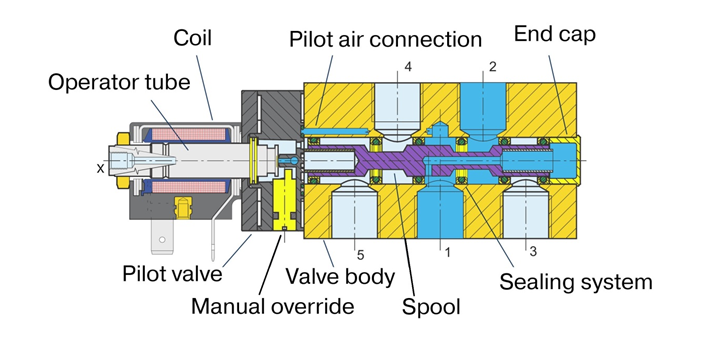
Port 1 is connected to working port 2 blue. A 5-way valve performs the same function as a 4-way valve. The 53 and 43 body designs allow compressed air to flow to one port of a double-acting air actuator while simultaneously allowing air to exhaust from the other port on the same air actuator at the same time. The experiment was conducted to show the principle work of the valve functionally. A 52-way pneumatic valve has two independent exhaust ports.
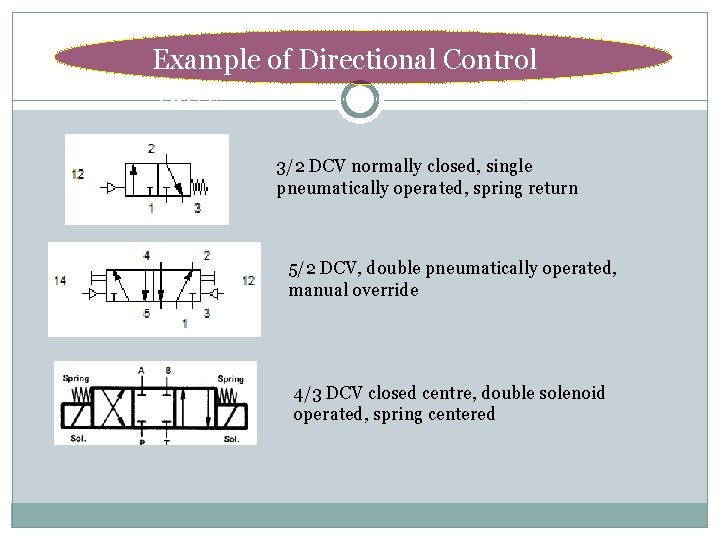 Source: slidetodoc.com
The 4-way function is a common type of directional control valve for both air and hydraulic circuits. When the spool is in neutral position the fluid flows directly to the tank with minimum internal pressure drops approximatively 1 bar 145 psi for each spool at nominal flow. The construction of valve and the principle of work are presented. Actuated positon drawn in green. If all of these are selected properly then the proper flow regulation can be achieved.
 Source: pinterest.com
Exhaust port 3 is closed black. Directional control valves are used in pneumatic systems to direct or stop the flow of compressed air or oil to their appliances. They are open circuit types. Following figure shows the Normal and working positions of DCV. These directional valves consist of a housing 1 control spool 2 control mechanism 3 and return spring 4.
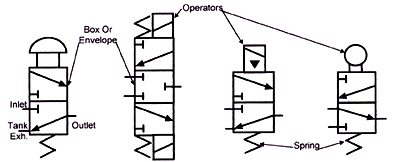 Source: instrumentationtools.com
They are open circuit types. They are open circuit types. You will also be completing the requirements for outcome 1 which is integrated into it. Spool of this valve is having three positions. When the spool is.
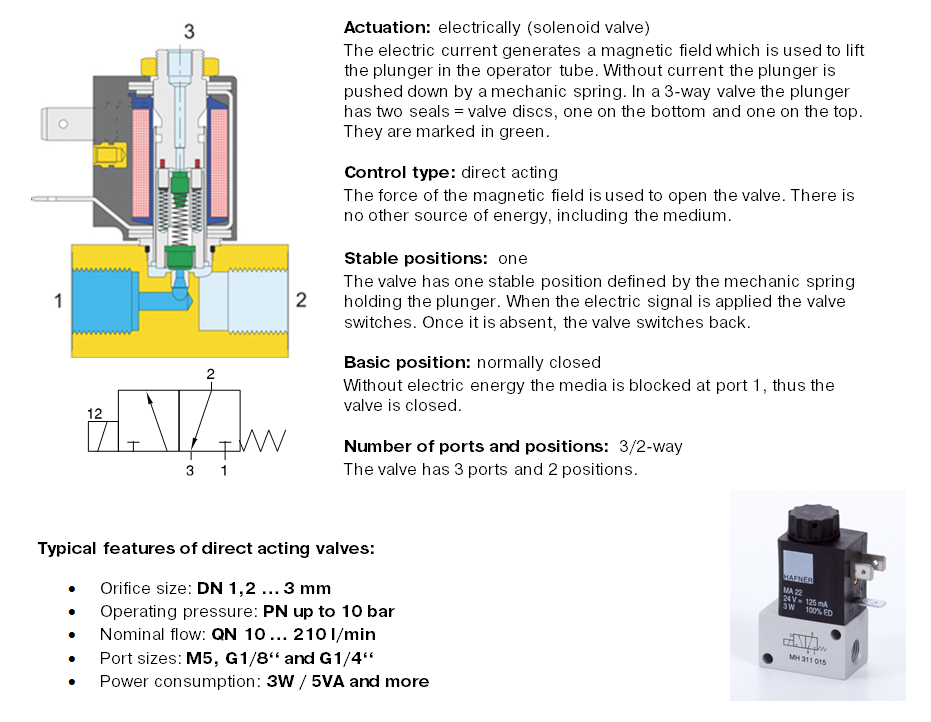 Source: hafner-pneumatik.com
The 53 and 43 body designs allow compressed air to flow to one port of a double-acting air actuator while simultaneously allowing air to exhaust from the other port on the same air actuator at the same time. 2 2 valve symbol A valve with 3 service ports and 2 position is designated as 2 3 way valve. The 4-way function is a common type of directional control valve for both air and hydraulic circuits. A 5-way valve performs the same function as a 4-way valve. Directional control valves are used in pneumatic systems to direct or stop the flow of compressed air or oil to their appliances.
 Source: automationforum.co
The 4-Way Directional Valve block represents a directional control valve with four ports and three positions or flow paths. The designation of the directional control valve refers to the number of working ports and the number of switching positions. A 5-way valve performs the same function as a 4-way valve. The 4-Way Directional Valve block represents a directional control valve with four ports and three positions or flow paths. These control signals traditionally based on 3-15psi 02-10bar more common now are 4-20mA signals for industry.
 Source: argo-hytos.com
There are three positions in the 43 valve that can be utilized to control a hydraulic cylinder. When the spool is. The construction of valve and the principle of work are presented. This means that both port A2 and B4 connect to exhaust port R3. Analysis for magnetic circuit and simulation for valve performance were done.
 Source: yumpu.com
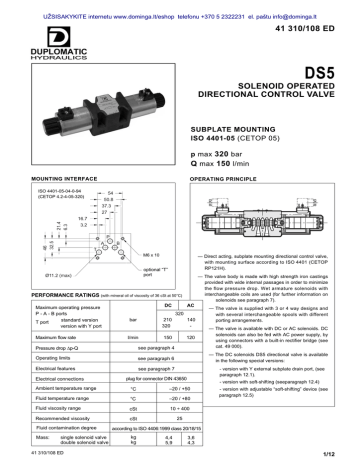
2 2 valve symbol A valve with 3 service ports and 2 position is designated as 2 3 way valve. They are open circuit types. OPERATING PRINCIPLE Salami directional control valves belong to the 63 or 64 type. TUTORIAL 4 DIRECTIONAL CONTROL VALVES The material needed for outcome 2 is very extensive so there are ten tutorials in this outcome. Therefore addi- tional isolator valves are required in many applications and must be taken into account for the OnOff series.
 Source: youtube.com
Valve symbol of a mono-stable 42-way valve with ISO and alternative port designation. These control signals traditionally based on 3-15psi 02-10bar more common now are 4-20mA signals for industry. If all of these are selected properly then the proper flow regulation can be achieved. A valve with 4. You will also be completing the requirements for outcome 1 which is integrated into it.
 Source: youtube.com
2 2 valve symbol A valve with 3 service ports and 2 position is designated as 2 3 way valve. The construction of valve and the principle of work are presented. ISO Schemes of directional control valves Page 3 Hafner-Pneumatik Krämer KG Stammheimerstraße 10 D-70806. SCOPE AND PURPOSE To provide a glossary to define terms commonly used in control valve industry. These control signals traditionally based on 3-15psi 02-10bar more common now are 4-20mA signals for industry.
Source: hafner-pneumatik.com
The 5-way valve is found most frequently in air circuits. The series of tutorials provides an extensive overview of fluid power for students at all levels seeking a good knowledge of fluid power equipment. The opening or closing of control valves is usually done automatically by electrical hydraulic or pneumatic actuators. You will also be completing the requirements for outcome 1 which is integrated into it. The 5-way valve is found most frequently in air circuits.
 Source: yumpu.com
How does a directional control valve work. A 3-position 4-way valve stops an actuator or allows it to float. I also make the Dia. The 4-way function is a common type of directional control valve for both air and hydraulic circuits. The 53 or 43 series are directional-control valves.
 Source: boschrexroth.com
These control signals traditionally based on 3-15psi 02-10bar more common now are 4-20mA signals for industry. The 53 and 43 body designs allow compressed air to flow to one port of a double-acting air actuator while simultaneously allowing air to exhaust from the other port on the same air actuator at the same time. A P Fig 41. A 3-position 4-way valve is more common in hydraulic circuits. The 4-Way Directional Valve block represents a directional control valve with four ports and three positions or flow paths.
 Source: manualzz.com
They can control 6 gallery in 3 or 4 spool positions simultaneously. If all of these are selected properly then the proper flow regulation can be achieved. SCOPE AND PURPOSE To provide a glossary to define terms commonly used in control valve industry. Directional control valves are used in pneumatic systems to direct or stop the flow of compressed air or oil to their appliances. Retract liquid is introduced from the hydraulic pump to the rod end of the cylinder which in turn causes it to retract.
 Source: youtube.com
About this video-In this video you will get the working principle of the 42 double coil solenoid valve to help you with your selection. The series of tutorials provides an extensive overview of fluid power for students at all levels seeking a good knowledge of fluid power equipment. How does a directional control valve work. Symbols of the most common valves 22-way valve Normally closed Normally open 32-way valve Normally closed Normally open. SCOPE AND PURPOSE To provide a glossary to define terms commonly used in control valve industry.
 Source: hafner-pneumatik.com
The 4-way function is a common type of directional control valve for both air and hydraulic circuits. A 3-position 4-way valve stops an actuator or allows it to float. When the spool is in neutral position the fluid flows directly to the tank with minimum internal pressure drops approximatively 1 bar 145 psi for each spool at nominal flow. - 4 - CONTROL VALVE TERMINOLOGY per ISA-DS7505 1. These directional valves consist of a housing 1 control spool 2 control mechanism 3 and return spring 4.
 Source: argo-hytos.com
The 53 or 43 series are directional-control valves. A valve with 4. When the spool is. The operation of the directional control valves is determined by certain factors they are spool-type spool positioning method of control and special features. The 4-Way Directional Valve block represents a directional control valve with four ports and three positions or flow paths.
This site is an open community for users to submit their favorite wallpapers on the internet, all images or pictures in this website are for personal wallpaper use only, it is stricly prohibited to use this wallpaper for commercial purposes, if you are the author and find this image is shared without your permission, please kindly raise a DMCA report to Us.
If you find this site beneficial, please support us by sharing this posts to your own social media accounts like Facebook, Instagram and so on or you can also save this blog page with the title 43 directional control valve working principle by using Ctrl + D for devices a laptop with a Windows operating system or Command + D for laptops with an Apple operating system. If you use a smartphone, you can also use the drawer menu of the browser you are using. Whether it’s a Windows, Mac, iOS or Android operating system, you will still be able to bookmark this website.


